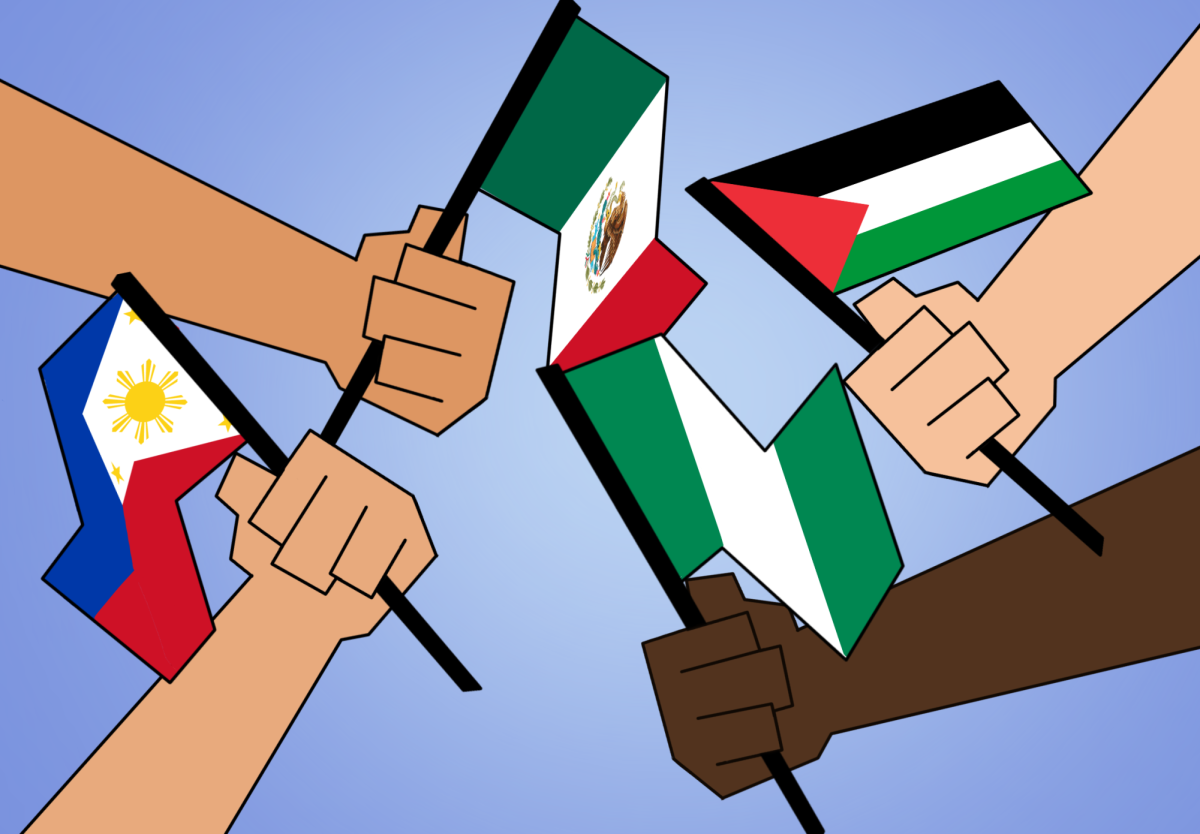
Throughout history, new cultures have always spread across different continents and populations. It is inevitable for new ideas to rise and fall throughout generations, but these ideas don’t simply rise on their own—they also build off one another. There are many examples of syncretism, even in the modern world; music, art, and religion are all key examples and daily reminders of how cultures spread and develop throughout history.
Multicultural is a perfect opportunity for Aviators to not only express their own culture but others as well—and learn how they blend with each other. During this time, students can embrace different traditions through participating in a research presentation, fashion show, or performance.
Students have an abundance of topics to explore for their multicultural research presentations. Common topics include Postres Latinos, Japanese Culture, the history of countries, foods from around the world, and celebrations. These popular ideas have both influenced and been influenced by other cultures around the world throughout history; Postres Latinos, a frequent research topic over the years, has been shaped by various Indigenous, European, and African culinary influences throughout history. Flan, which is widely known as a Mexican dessert, has its origins in Ancient Rome. It was known as flado, but when the Roman Empire fell it was eventually adopted by Spanish cooks and later brought to the Americas by Spanish conquistadors and colonists. Another Latin dessert influenced by another culture is arroz con leche–a dessert with its origins in Spain but is also believed to have some Arabic influence, as it is believed to be inspired by traditional Arabic rice and cinnamon mixtures. A variant of this dish is arroz con dulce, in which the staple “milk caramel” was believed to be invented by an Afro-descendant enslaved woman.
The multicultural fashion show is another great example of expressing diverse traditions. During the fashion show, aviators walk the stage and demonstrate their cultural clothing. For example, many students have gone up on stage wearing quinceanera dresses (a type of grand dress used to celebrate a girl’s transition to adulthood), kimonos (a cultural symbol representing identity and harmony within nature, worn during major life events such as weddings, graduations, and coming of age ceremonies), and sarees (a traditional Indian silky garment globally recognized for its symbolism of elegance and traditional beauty, often worn during grand ceremonies and celebrations). There are many more cultures which are represented in Multicultural through dances, foods, and clothing, which is what makes Multicultural a great event to connect with others and learn about the differences and similarities we all have between ourselves.
The fashion show during the Multicultural celebration isn’t the only way students are able to embrace their own or a different culture. Students perform on stage in front of their peers and parents to display cultural dances, songs, and more. There’s always a variety of songs sung and dances performed during the annual Multicultural celebration. The dances that take place during Multicultural originate from various regions of the world. There are commonly various dances from different regions in Africa, Latin America, and even regions in Oceania such as the Samoan region.
Many cultures celebrated today have slowly developed throughout time, with some cultures beginning as branches of different cultures and others being completely new cultures that developed over time. Regardless of their beginning, the history of every culture that we know now is a complicated one; every tradition has its own complex history.